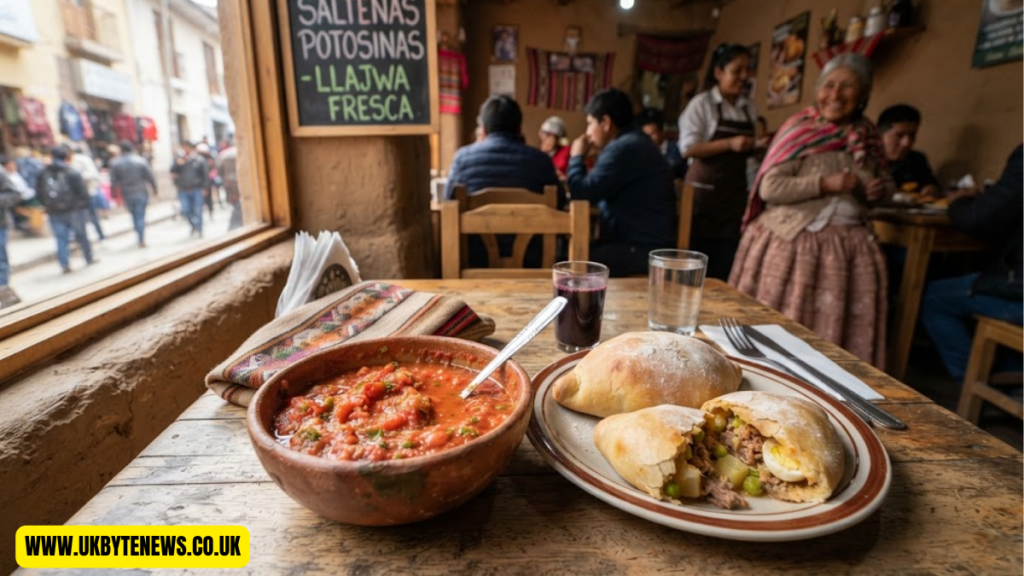

The first thing you notice about llajwa salsa is not just the heat. It is the freshness. Ripe tomato, sharp chilli, salt and fragrant Andean herbs come together in a sauce that can make a simple potato, salteña or grilled piece of meat suddenly taste alive.
If you are searching for the best llajwa salsa near me, you are probably not looking for an ordinary bottled hot sauce. You want the real Bolivian condiment: freshly prepared, slightly chunky, bright, spicy and packed with the unmistakable flavour of locoto peppers.
Llajwa is deeply woven into everyday Bolivian food culture. It appears beside everything from soups and potatoes to salteñas and grilled meats, and recipes vary from one region to another. Bolivia’s La Paz tourism authority describes it as a sauce served with foods across the country, from restaurants to street-food stalls.
My take: the best version is usually the one that tastes freshly made rather than overly processed or sweet.
This guide will help you find, recognise, order and make llajwa better than ever.
The World’s Best Places to Try Llajwa
Llajwa is still a niche discovery outside South America, so it is worth separating genuinely documented versions from restaurants that simply serve a generic chilli sauce.
Anthony’s Grill — London, United Kingdom
At Anthony’s Grill on New Cross Road, Bolivian cooking gets a particularly clear showcase. The restaurant says its Bolivian plates come with llajwa made fresh every morning from locotos, tomato and quirquiña.
That detail matters. Locoto and quirquiña give the sauce a distinctly Bolivian personality rather than turning it into another generic salsa.
Order a Bolivian classic such as silpancho or salteñas and use the llajwa gradually. The heat is there to sharpen the dish, not bury it.
Tambo l’Atelier — Paris, France
Paris offers an unexpected route into Andean flavours through Tambo l’Atelier. Its menu lists llajwa in dishes including its Pollada bowl and vegan bowl, describing it with tomato, rocoto and huacatay, alongside lime and cumin in the vegan version.
It is not a traditional Bolivian restaurant in the same sense as a family-run Bolivian establishment, but it shows how the flavour profile has travelled into modern Latin American cooking.
El Chalten — Paris, France
Another Paris option is El Chalten, where the menu has listed a dedicated llajwa sauce alongside empanadas. Its description focuses on tomatoes, onion and traditional chilli, presenting it as an Andean-style condiment.
For travellers already exploring Paris’s Latin American food scene, this is an interesting way to encounter llajwa outside Bolivia.
Waterside at Solaire Resort — Parañaque, Philippines
Llajwa even turns up in an upscale resort setting in the Philippines. Recent Tripadvisor reviews for Waterside at Solaire mention complimentary llajwa served with sourdough and praise it as one of the meal’s standout elements.
That is a fascinating example of the sauce crossing culinary boundaries. It may not be the first destination an expert would choose for traditional Bolivian llajwa, but it demonstrates how chefs can use its fresh chilli character in contemporary dishes.
Gustu — La Paz, Bolivia
For the deepest connection to Bolivian ingredients, La Paz is the obvious destination. Gustu, founded with Claus Meyer and chef Kamilla Seidler, became known for building sophisticated dishes around ingredients and culinary knowledge gathered from across Bolivia. National Geographic specifically documented the restaurant’s relationship with llajwa and the challenge of presenting it in a fine-dining environment without losing its cultural identity.
Cochabamba’s traditional markets — Bolivia
Sometimes the most memorable experience is not a famous restaurant at all. In Cochabamba, traditional market cooks have long prepared llajwa using a batán, a flat stone grinding tool.
Los Tiempos documented Juana Fuentes preparing the sauce at Mercado 27 de Mayo, grinding tomatoes and locotos by hand. The report also describes different styles, including green llajwa and versions with onion and quirquiña.
That is the benchmark to keep in mind: fresh ingredients, rough grinding and plenty of character.
Best Places in the USA for Llajwa
The United States has several strong Bolivian food communities, particularly around Northern Virginia and other areas with established Bolivian populations.
Nelly’s Bolivia — Dayton, Ohio
Nelly’s Bolivia currently lists Llajwa (Spicy Bolivian Salsa) among its sauces.
That makes it an especially useful option if your goal is simply to order the condiment rather than search an entire menu for it.
Luzmary Bolivian Restaurant — Falls Church, Virginia
Luzmary is another name worth knowing. Available restaurant listings specifically show salteñas paired with llajwa, including images and references to the sauce.
For a first order, salteñas are a smart choice because the juicy filling and spicy condiment make a natural combination.
La Cochabambina — Annandale, Virginia
Annandale has long been part of Northern Virginia’s Bolivian food scene, and La Cochabambina has documented llajwa preparation associated with the restaurant. Current listings place it on Little River Turnpike.
Julianna’s Restaurant — Providence, Rhode Island
Julianna’s current online ordering system explicitly offers a complimentary 1 oz green llajwa sauce.
Practical tip: when ordering in the USA, ask whether the llajwa is made with locoto. Some kitchens substitute more readily available chillies, which can produce a good sauce but a noticeably different flavour.
Best Places in the UK for Llajwa
Authentic Bolivian food is harder to find in Britain than Mexican or Peruvian cuisine, but London has a particularly useful option.
Anthony’s Grill — London
Anthony’s Grill, at 149 New Cross Road, London SE14, specifically says its Bolivian dishes are served with freshly made llajwa using locotos, tomato and quirquiña.
That makes it one of the strongest currently verifiable UK choices for someone specifically chasing the condiment.
Try the sauce with silpancho, pique macho or a salteña. If you love chilli, ask for extra rather than immediately drowning the plate.
How to Find Llajwa Near You in the UK
Google Maps can be surprisingly useful if you search intelligently. Instead of typing only “llajwa salsa”, try:
- “Bolivian restaurant near me”
- “Bolivian salteñas near me”
- “Bolivian restaurant llajwa”
- “locoto salsa Bolivian”
- “llajua Bolivian sauce”
Check the restaurant’s current menu before travelling. A restaurant may serve Bolivian food without listing llajwa online, while another may list it under llajua, yagua or “Bolivian chilli sauce”.
What Is Llajwa Salsa?
Llajwa, also written llajua or llajua/llajwa, is a traditional Bolivian fresh chilli sauce. Its core combination is usually locoto pepper, tomato and salt, with regional herbs such as quirquiña or wakataya added depending on the recipe.
The exact history is difficult to pin to one place. Sources connect the sauce with Bolivia’s Andean food traditions, while regional recipes have developed differently in places such as La Paz and Cochabamba.
Main Ingredients
- Ripe tomatoes
- Fresh locoto peppers
- Salt
- Quirquiña, wakataya or another traditional herb
- Onion, optional
- A small amount of oil, optional
A high-quality version tastes fresh, hot, slightly acidic and herbaceous. It should not taste like sugary ketchup with chilli added.
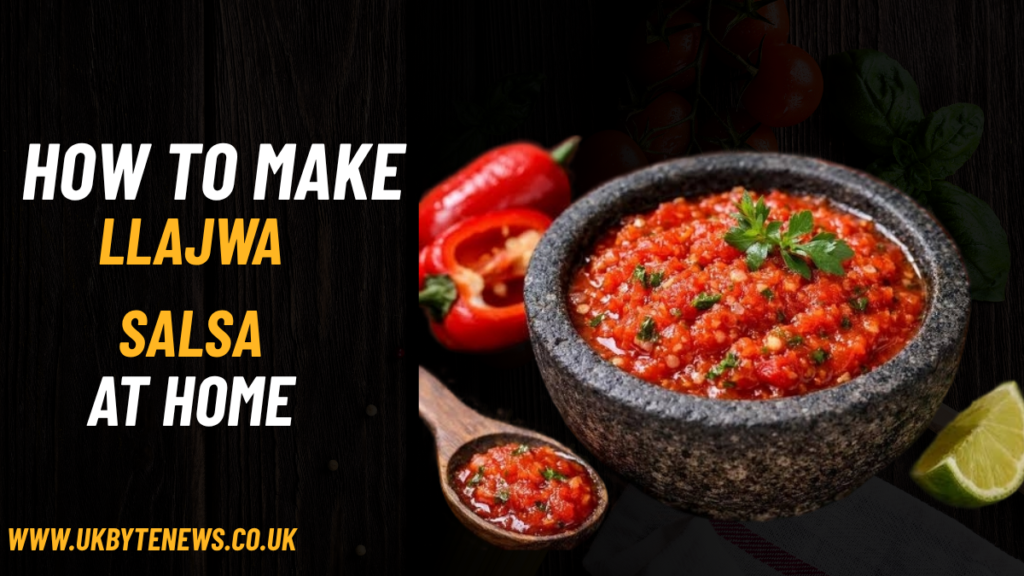
Texture matters, too. Traditionally, the ingredients can be ground on a stone batán, producing a more rustic sauce than a completely smooth blender puree.
How to Make Llajwa at Home
Prep time: 10 minutes
Cook time: None
Serves: 4
You do not need a traditional batán to make good llajwa at home. A mortar and pestle or food processor works, although a rough texture is preferable to a completely smooth puree.
1. Prepare the vegetables
Wash two ripe tomatoes and one or two fresh locoto peppers. Cut the tomatoes into chunks.
The number of locotos controls the heat. Remove some seeds and inner membranes for a gentler version; leave them in if you want serious heat.
2. Start grinding
Traditionally, the locoto is ground first with salt and herbs. At home, roughly chop everything and pulse it in a food processor.
Do not blend continuously for a long time. You are making a fresh condiment, not tomato soup.
3. Add the tomato
Add the ripe tomato and pulse again until the mixture becomes juicy but still slightly textured.
A good homemade llajwa should retain little pieces of its ingredients. That roughness gives it character.
4. Add the herbs
Add a small handful of finely chopped quirquiña if you can find it. Wakataya can also be used depending on the regional style.
If neither is available, cilantro can provide freshness, although the flavour will not be identical.
5. Taste and balance
Add salt little by little. Taste before adding more chilli.
Pro tip: ripe tomatoes are crucial. If your tomatoes are watery and bland, the finished sauce will be watery and bland too.
6. Add optional onion
For a Cochabamba-style variation, finely dice a little white onion and stir it through the finished sauce.
Some traditional preparations are intended to be eaten on the same day, particularly when fresh onion is included.
7. Serve immediately
Spoon the llajwa over boiled potatoes, grilled meat, salteñas, silpancho, rice dishes or soup.
One common mistake is making the sauce too smooth. Another is using too much tomato to tame the chilli. Llajwa should have heat, but the chilli should still taste fresh rather than simply painful.
What Should You Eat With Llajwa?
Start with foods that benefit from acidity and heat.
Best pairings include:
- Salteñas
- Silpancho
- Pique macho
- Boiled potatoes
- Grilled beef
- Anticuchos
- Soups
- Fried or roasted yuca
- Rice-based Bolivian dishes
Bolivian food sources consistently describe llajwa as an everyday accompaniment, while traditional recipes specifically pair it with potatoes, meats and other hearty foods.
Llajwa Salsa FAQ
Is llajwa the same as salsa?
Not exactly. Llajwa is a traditional Bolivian chilli sauce with locoto and tomato at its heart, while ordinary “salsa” can refer to many different preparations.
Where can I find authentic llajwa salsa near me?
Look first for Bolivian restaurants, especially those serving salteñas, silpancho or pique macho. Ask whether their sauce uses fresh locoto and whether it is made in-house.
Is llajwa very spicy?
It can be. Heat varies considerably according to the type and quantity of locoto used, whether seeds are retained and the regional recipe.
What is the difference between llajwa and llajua?
They are alternative spellings for the same traditional Bolivian sauce. You may also encounter names such as yagua in some contexts.
Can I make Bolivian llajwa without locoto?
Yes, although it will not taste exactly the same. Jalapeño is a commonly suggested substitute outside Bolivia, but locoto provides the distinctive flavour associated with traditional llajwa.
How long does homemade llajwa last?
Fresh llajwa is best eaten soon after preparation. A government-backed Argentine recipe for a llajwa-style sauce recommends consuming it the same day or refrigerating it to reduce the risk of fermentation.
Final Thoughts
Llajwa is one of those foods that makes you understand a cuisine through a single spoonful. It is hot, but heat is only part of the story. Tomato brings freshness, herbs add fragrance and locoto gives the sauce its unmistakable Bolivian identity.
When choosing a restaurant, look beyond a generic “spicy salsa” description. Fresh preparation, locoto, traditional herbs and classic Bolivian dishes are much better clues.
If you are still hunting for the best llajwa salsa near me, start with a genuine Bolivian restaurant and order a salteña or silpancho alongside it. Better yet, make a small bowl at home and discover how quickly it disappears.
A little chilli, a ripe tomato and a good meal can turn an ordinary day into a very tasty one.